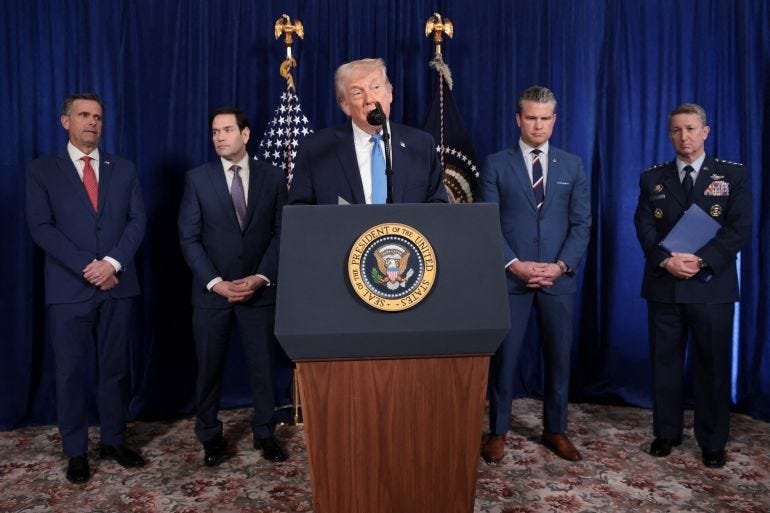







Over the next 24 hours, the world has witnessed extraordinary scenes of hostages being released from Gaza and reunited with their families. President Donald Trump also addressed the Israeli Knesset, saying today marks the “historic dawn of a new Middle East” before world leaders convene in Egypt to discuss the subsequent phases of his 20-point plan for a longer-term peace and rehabilitation of Gaza.
As this all unfolds, I’ll be focused on three big questions:
What does Hamas do?
In the last hostage deal, one that I helped negotiate, Hamas used the ceasefire to crawl out of tunnels and reestablish control in Gaza. That meant killing Gazans who resisted Hamas and using the hostage exchanges as grotesque propaganda displays. This jeopardized any hope to extend the ceasefire earlier this year into a longer-term truce. This time around, Hamas appears to be doing the same thing, summarily rounding up Palestinians in the streets.
But this time around is also different. The new deal allows Israeli forces to remain in more than half the Gaza strip, something Hamas before this year never would have accepted. It authorizes foreign military forces to come into those areas to ensure that Hamas can never return to them. The new deal also enjoys support from nearly all Arab and Muslim-majority states and calls on Hamas to disarm.
Hamas will likely now turn its guns on innocent Palestinians, but its maneuvering room is limited.
If all of Gaza is to be rehabilitated and reconstructed, Hamas must accept the deal in total and give up its false claim to authority in the Strip.
Are interim political and security structures developing?
The key elements of this deal beyond the hostage releases include the establishment of an interim security force and political structure for Gaza. If these structures are stood up, then the 20-point plan has a chance to succeed. If they are not, then Hamas over time could reestablish its authority by force, an outcome that forfeits any hope for longer-term peace or the rehabilitation of the Gaza Strip.
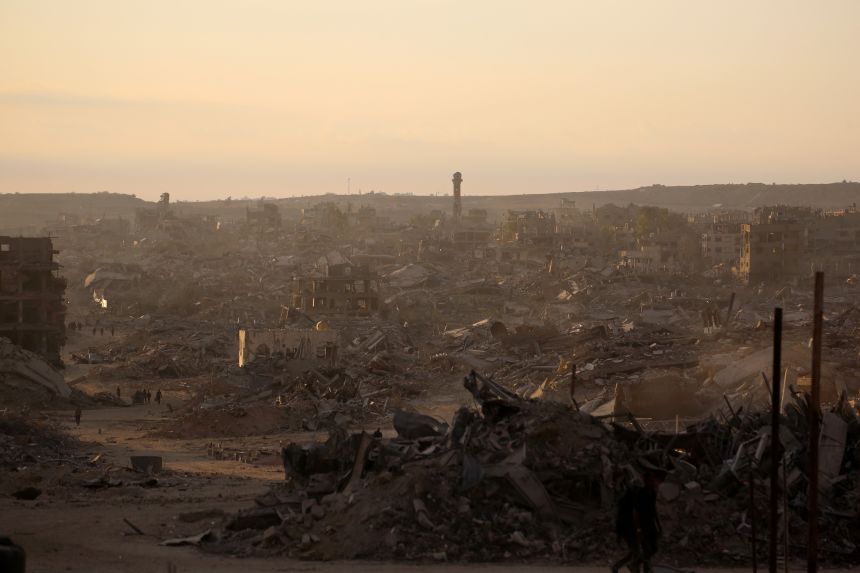
A general view shows destroyed buildings as the sun rises in Gaza City on October 12, 2025. Bashar Taleb/AFP/Getty Images
This means focusing over the coming weeks on whether countries are prepared to contribute forces to an interim security force, and whether an interim governing entity can be stood up without devolving into months of quarreling. It is a good sign that the US military under Central Command is already establishing its positions outside of Gaza to help monitor the situation and ultimately enable such a force. US forces should not enter Gaza, but they will be essential to securing foreign troop contributions and ensuring such a force can succeed.
On the political entity, it’s ultimately up to Palestinians to determine who participates, but without US leadership, the process could devolve into months of wrangling, which would play into Hamas’s hands.
Is a viable reconstruction plan developing?
The reconstruction of Gaza will take a decade or more and hundreds of billions of dollars. Ten years ago, the US helped organize a global coalition and massive resources for the reconstruction of Mosul, in northern Iraq, which had been nearly destroyed in over a year of urban combat to defeat ISIS.
Gaza is even more complex, with 300 miles of tunnels dug in multiple stories under the entire Strip, a construction effort that Hamas undertook over two decades without anyone working to stop it.
Any hope for the rehabilitation of the Gaza strip requires a globally coordinated effort led by the US with participation of non-Hamas affiliated Palestinians, and the vast resources of America’s regional partners and allies. This should be a focus of the summit in Cairo, and I’ll be watching for specific commitments of resources as well as signs of an organized effort to plan and then implement reconstruction.
Of course, if Hamas insists on remaining in control of the areas above the Israel lines under Trump’s deal, then it will be Hamas that’s blocking reconstruction of those areas. Absent Hamas relinquishing security control, few countries will be willing to come into Gaza or devote resources to its reconstruction.

Demonstrators take part in a protest to demand the immediate release of hostages held in Gaza since the October 7, 2023, attack on Israel by Hamas and to end the war, as a video released by Hamas of hostage Evyatar David is displayed, in Tel Aviv, Israel, August 2, 2025. Ammar Awad/Reuters
Over the next 24 hours, the focus will rightly be on the return of hostages after 740 horrific days in dark tunnels and unspeakable torture. Think about Evyatar David, 22 years old when taken hostage from a music festival and used repeatedly by Hamas in horrific propaganda videos: forced to watch the release of his friends, then returned to a tunnel, and later shown emaciated and digging his own grave.
His treatment is a reminder of why there is no hope for Gaza nor for a future peace between Israelis and Palestinians if Hamas can cling to power by force of arms in Gaza. That is why beyond celebrating the return of the hostages, the focus must remain on what comes next, and the full implementation of President Trump’s 20-point comprehensive plan.