
1. What’s Actually Going On
Let me start by laying out the solid facts, and then we’ll unpack what remains murky.
What We Know
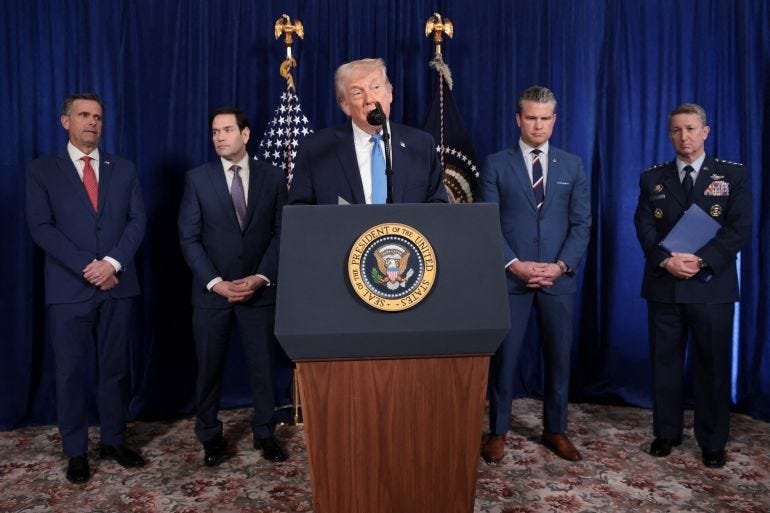
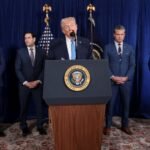
- On October 15, 2025, Trump publicly confirmed that he had authorized covert CIA operations in Venezuela. AP News+4The Washington Post+4AP News+4
- He gave two stated reasons:
1. That Venezuelan prisons have been “emptied” into the U.S. (i.e. prisoners allegedly crossing over). Reuters+4The Washington Post+4AP News+4
2. That many drugs are coming in from Venezuela, especially via sea routes. AP News+4ABC News+4The Washington Post+4 - He also said, “We are certainly looking at land now,” implying the U.S. might extend operations from sea into Venezuelan territory. ABC News+2Al Jazeera+2
- He declined to confirm whether the CIA’s authority includes targeting President Nicolás Maduro. Reuters+3The Washington Post+3ABC News+3
- The CIA’s role is reportedly being expanded: more agents in the Caribbean and Central America to gather intelligence (not necessarily yet for lethal strikes). Al Jazeera+3The Washington Post+3AP News+3
- Meanwhile, the U.S. military has already conducted several air or naval strikes on vessels off the Venezuelan coast, alleging they were drug-smuggling vessels. These strikes have killed people (27 total claimed so far) and were carried out by Defense Department forces, not publicly by the CIA. AP News+6AP News+6The Washington Post+6
What We Don’t Know (Yet)
- The precise authority given to the CIA. Is it limited to intelligence, sabotage, infiltration, lethal action, or regime change?
- Whether the “finding” (the secret legal authorization) allows paramilitary or kinetic action or just clandestine support operations.
- The rules of engagement or oversight — who supervises or constrains these covert operations.
- What proof or intelligence supports the claims (e.g. that certain boats had drugs, or that Maduro is directly complicit in trafficking).
- How Venezuela and its allies (Russia, China, Cuba) will respond beyond rhetorical condemnation.
- How Congress and international bodies will treat this move legally and politically.
2. The Context
To understand why Trump made this move, we need to see where things stand already.
U.S.–Venezuela Tensions
- The Trump administration has long accused Nicolás Maduro’s regime of corruption, human rights abuses, and election fraud.
- The U.S. has designated Venezuelan-linked cartels and “Cartel de los Soles” as foreign terrorist organizations. Wikipedia+2AP News+2
- The U.S. has already ramped up naval and military presence in the Caribbean. Wikipedia+2AP News+2
- Diplomatic ties are largely cut; the U.S. has shut down formal talks, shunned Maduro’s government, and supported opposition figures. Wikipedia+3AP News+3Al Jazeera+3
Recent Military Strikes
- Since early September, the U.S. military has carried out at least five strikes on vessels alleged to be smuggling drugs from Venezuela — 27 deaths claimed. The Washington Post+6TIME+6The Washington Post+6
- One of the first such operations occurred on Sept 2, with reports of 11 people killed on a Venezuelan vessel. Wikipedia+2Wikipedia+2
- The administration claims these operations fall under “law of armed conflict,” treating these drug traffickers as “unlawful combatants.” The Washington Post+4The Washington Post+4TIME+4
- Critics argue these strikes risk violating international law, due process, and norms against extrajudicial killing. AP News+4The Washington Post+4TIME+4
3. Why This Matters (Big Picture)
Understanding the stakes helps us see what this move could lead to — or fail to lead to.
Legal & Constitutional Risks
- War Powers & Congressional Authority: The U.S. Constitution vests war-declaring power in Congress. Covert or kinetic operations without congressional approval risk constitutional conflict.
- Covert Action Oversight: Under U.S. law (e.g. National Security Act), covert CIA operations require “findings” signed by the President and reporting to oversight committees. But the public admission by Trump is unusual and may expose the operation to scrutiny.
- International Law: If U.S. forces act (on land or sea) in Venezuelan sovereign territory without consent, that violates the UN Charter and norms of non-intervention.
- Definition of Combatants: Labeling traffickers as “unlawful combatants” is controversial. The criteria under international humanitarian law may not be met.
Strategic & Geopolitical Effects
- Escalation Risk: What begins with covert action could spiral into overt conflict, drawing in allies, proxies, or regional blowback.
- Regional Backlash: Latin American countries historically resist U.S. interventions (e.g. Operation Condor, the 20th century CIA interventions). Venezuela will rally regional and global support.
- Credibility and Deterrence: Trump is signaling that the U.S. is willing to use force deeper in Latin America, not just via diplomacy or sanctions.
- Opposition leverage: This may embolden Venezuelan opposition elements, or conversely, provoke crackdown by Maduro’s regime.
Domestic & Political Ramifications
- Trump is making this statement public. That opens his administration to criticism and demands for accountability (e.g. from Congress).
- He’s treading a line: he claims he does not necessarily want regime change (publicly), yet he’s giving the CIA real power. That ambiguity may be strategic or risky.
- Monitoring from both sides of the U.S. political aisle will intensify—if the U.S. ends up in conflict, everyone will want blame or credit.
4. Possible Scenarios (and Which I Think Are Likely)
Let me sketch what might happen. These are possibilities, not predictions.
Scenario A: Limited Covert Ops, No Overt Incursion
- CIA conducts intelligence collection, disruption, sabotage, psychological warfare.
- Strikes continue from sea; expansion into land operations is cautious and surgical.
- The public face remains drug interdiction, not regime overthrow.
Pros: Lower risk of open war, more plausible plausible deniability, incremental escalation
Cons: Might not achieve broader political goals, will still draw criticism
Scenario B: Stepped-Up Kinetic Land Operations
- The U.S. orders strikes on Venezuelan territory — targeting cartel bases or even paramilitary groups.
- These operations could risk clashes with Venezuelan military or allied forces.
Pros: More pressure on Maduro regime
Cons: High risk of open war, regional backlash, full-blown conflict
Scenario C: Covert Regime Change Attempt
- The CIA (or U.S.-backed proxies) try to foment a coup, support an insurgency, or extract Maduro.
Pros: If succeeded, huge strategic payoff
Cons: Massive risk of failure, international condemnation, blowback
What I Think Is Most Likely
Given the legal, diplomatic, and military constraints, I believe Scenario A is likeliest in the near term — covert actions, intelligence expansion, continued naval strikes. But any escalation towards Scenario B or C can’t be ruled out, especially if Trump feels domestic pressure or the situation in Venezuela deteriorates further.
5. What to Watch (Key Indicators)
These are signals that will tell us how far this goes:
| Indicator | Why It Matters |
|---|---|
| Declassified finding or legal rationale | Will reveal scope and limits of CIA powers |
| Authorization from Congress or pushback | How much oversight will there be? |
| Public admission of land strikes | Marks a shift from covert to overt war |
| Venezuelan military response or mobilization | Could trigger escalation |
| Statements from regional governments or OAS/UN | Gauge diplomatic isolation or support |
| Casualty / collateral damage reports | May shift public or international opinion |
| Leaks or whistleblowing from U.S. agencies | Could reveal hidden or controversial operations |
6. A Micro-Story From the Field
Here’s a small illustration to make this less abstract:
In 2019–2020, a private group aligned with Venezuelan opposition tried a botched raid on Venezuelan territory (Operation Gideon). The raid collapsed, several were arrested, and the U.S. government denied involvement. That event showed how risky covert regime-change tactics can be — failure brings huge backlash. Wikipedia
That’s a cautionary tale for Trump’s current gambit. History suggests covert action in Venezuela is a minefield.
7. Bottom Line & What This Really Means
- Trump’s move is bold and escalatory. It’s beyond rhetoric—he is placing real power in the hands of intelligence operatives.
- But it’s also ambiguous. He’s left himself flexibility — he hasn’t fully committed to strikes on land or removal of Maduro.
- The legal, diplomatic, and strategic risks are high. The U.S. could find itself in a wider conflict.
- For Venezuela and its neighbors, this is not just a threat — it’s a turning point. They’ll push back hard.
- For the U.S., the biggest question: can a covert campaign be kept covert? History says leaks, errors, and blowback often emerge.